

From laser-guided bombs to targeting algorithms and drones, the rhetoric of precision has constantly reinvented itself to cloak war in a veneer of moral respectability. Maelle L’Homme and Marianne Perez describe how this discourse – from the Gulf War to Gaza – creates the illusion of “surgical” violence, and show how the integration of artificial intelligence into weapons systems merely serves to maintain this veil of deception, whilst potentially lowering the threshold for the use of force.
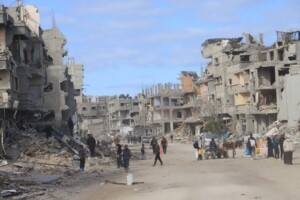
In a May 2024 interview with Norwegian broadcaster NRK, Israeli government spokesman David Mencer echoed the words of Tal Heinrich, Prime Minister Benjamin Netanyahu’s spokeswoman: “We have set the gold standard [in war].”[1]David Mencer, “We have set the gold standard in war”, interview on NRK TV, Dagsrevyen, 26 April 2024, https://tv.nrk.no/serie/dagsrevyen/sesong/202404/episode/NNFA19042624 ; Tal Heinrich, … Continue reading The “standard” in question refers to the rate of civilian casualties inflicted by Israel in the Gaza Strip in response to the Hamas attack of 7 October 2023. By also describing Tzahal, the Israel Defense Forces (IDF), as “the most humane army which has ever existed in living memory,”[2]David Mencer, “We have set the gold standard…”, ibid. David Mencer was perpetuating a well-rehearsed line taken up by some members of the Israeli political establishment – from Ariel Sharon[3]Frédéric Encel, « L’armée israélienne et ses spécificités géopolitiques », Hérodote, vol. 1, no 116, 2005, p. 138-149. to Netanyahu – that aims to present the IDF as the “most moral army in the world”.[4]Lazar Berman, “PM announces 2nd stage of war, with broad ground offensive; says ‘Never Again’ is now”, The Times of Israël, 29 October 2023, … Continue reading On 25 July 2024, in front of the United States (US) Congress, the Israeli Prime Minister clarified his thoughts by saying: “Israel has implemented more precautions to prevent civilian harm than any military in history and beyond what international law requires”[5]Prime Minister’s Office, “PM Netanyahu’s Address to a Joint Meeting of the US Congress”, Gov.il, Israelian government website, 24 July 2024, https://www.gov.il/en/pages/event-congress240724 – a particularly dubious assertion, given that 70-80% of the 72,200 casualties recorded in the Gaza Strip since 7 October are civilians.[6]Mike Spagat, “Netanyahu got it wrong before the US Congress: IDF’s clean performance in Gaza is a lie”, AOAV, 2 August 2024, … Continue reading
The debates over what constitutes a “ratio” of civilian casualties deemed “acceptable” are typical of contemporary international humanitarian law, which prohibits not so much the killing of civilians as the killing of a number of civilians that is disproportionate to the desired military objective. In Iraq in 2003, the US military set the threshold for non-combatant casualties (the “non-combatant casualties cut-off value”) at thirty. This means that “US Air Force pilots could kill up to 29 Iraqi civilians” for one so-called “high value” target.[7]Aurélien Berthier, « Habsora : la guerre dopée à l’IA », entretien avec Mathias Delori, Agir par la culture, 27 mars 2024, https://agirparlaculture.be/habsora-la-guerre-dopee-a-lia In Gaza, the Israeli army deemed that, for one senior Hamas official, one hundred civilian deaths or so was, on balance, an acceptable figure.[8]Yuval Abraham, “‘A mass assassination factory’: Inside Israel’s calculated bombing of Gaza”, +972 Magazine, 20 November 2023, … Continue reading Behind these macabre calculations lies the moral illusion of a more tolerable war. Even though the idea of presenting war in a less gruesome light is nothing new, it is constantly reinventing itself.
Precision warfare: the quest for efficiency versus a mechanism for legitimacy
Before World War I, the international community sought to ban aerial bombardment on the grounds that its inaccuracy would have a disproportionate effect on civilian populations.[9]At the International Peace Conference held in The Hague in 1899, the participating powers adopted a declaration prohibiting the launching of projectiles and explosives from balloons or other similar … Continue reading In the 1930s, the American doctrine of daylight precision bombing – developed at the Air Corps Tactical School at Maxwell Field, Alabama – began to replace the practice of carpet bombing which had prevailed until that point. At the time, this doctrine of precision primarily reflected the desire to maximise damage by focusing on specific targets of military significance, whilst limiting collateral damage and avoiding civilian casualties was seen as a secondary benefit.[10]John T. Corell, “Daylight Precision Bombing”, Air Force Magazine, vol. 91, no. 10, October 2008.
During World War II, the first guided weapons appeared, among them the V2, a long-range ballistic missile developed by Nazi Germany. It was the Vietnam War, however, that ushered in a radically new era with the use of the first laser-guided bombs, which were far more accurate than conventional bombs.[11]Joseph Henrotin, « Bombe guidée : les paradoxes de la précision », Areion 24 news, 9 novembre 2018, https://www.areion24.news/2018/11/09/sociologie-de-la-bombe-guidee-les-paradoxes-de-la-precision The first televised war, it brought the realities of the battlefield into the homes of Western audiences, thereby narrowing the symbolic distance between the front line of a distant war and the home front, and in turn wearing down democratic public opinion’s tolerance of the human cost of the conflict. In response to this challenge, and to assert the crucial importance played by protecting civilians when making targeting decisions, the US administration invoked the principle of precision for the first time.
“The Gulf War also saw the first practical applications of artificial intelligence (AI) by the US military.”
It was in the 1990s, during the first Gulf War, that this rhetoric of precision became established as a means of legitimising violence, at a time when weapons development was accelerating dramatically thanks to technological advances in guidance systems. The Gulf War also saw the first practical applications of artificial intelligence (AI) by the US military. Farewell dirty wars and their mass casualties! These new technologies now promised a less destructive and “cleaner” war, enabling “surgical” strikes and sparing non-combatants. Televised images of guided missiles – although they accounted for a tiny fraction of the ordnance used in this conflict –[12]A.P.V. Rogers, “Zero-casualty warfare”, International Review of the Red Cross, vol. 82, no. 837, March 2000, p. 172. dominated the media narrative, while the use of medical metaphors helped legitimise the discourse aimed at making war more presentable.
From remote war to risk-free war
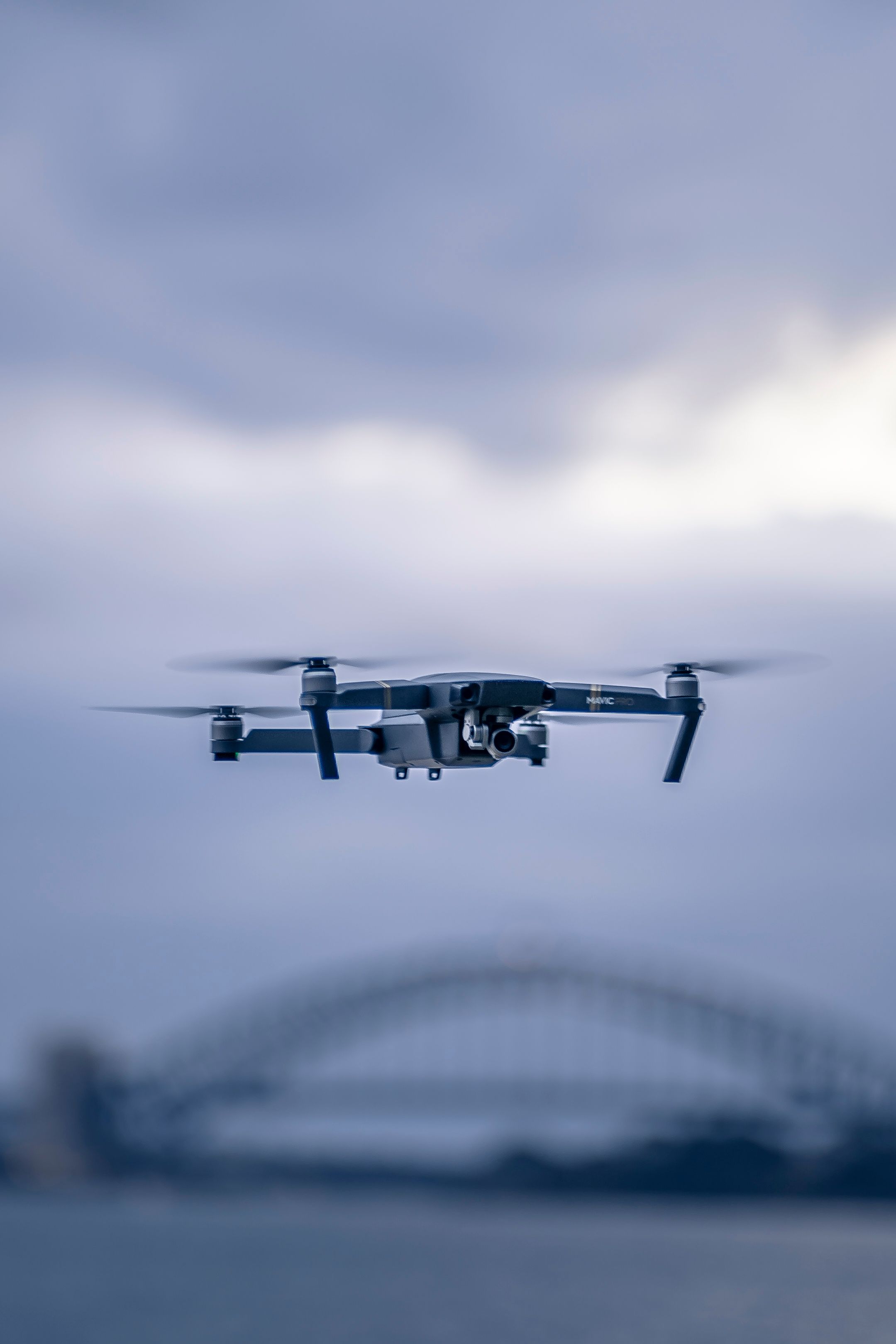
From 2001, another transition started to emerge in the Western way of waging war, with the much more intensive use of armed drones, especially in Afghanistan.[13]Anne-Katrin Weber, « Le dispositif du drone », A contrario, vol. 2, no 29, 2019, p. 3-24. In addition to their greater accuracy, the weapons deployed were increasingly guided or operated remotely, reinforcing the notion of “remote warfare” and “riskless war” as the number of boots on the ground decreased.[14]Gregory S. McNeal, “Prepared Text: Obama’s Speech On Drones And Guantanamo”, Forbes, 23 May 2013, … Continue reading The air offensive carried out by the North Atlantic Treaty Organization (NATO) on the Federal Republic of Yugoslavia between March and June 1999, known as Operation Allied Force, had already shown how one side in a conflict could suffer no casualties, with NATO forces recording no deaths. In his 2001 book, Michael Ignatieff offered an analysis of a war in which the combatants were fighter pilots and computer programmers. He asked: “If war becomes unreal to the citizens of modern democracies, will they care enough to restrain and control the violence exercised in their name?”.[15]Michael Ignatieff, Virtual War: Kosovo and Beyond, Picador Books, 2000, p. 4.
The moral justification for a war without risk for one of the parties echoes the debates about the advent of “non-retaliatory”, and at times “out-of-sight”, weapons during World War I – weapons that were considered to be immoral at the time and characteristic of a “coward’s war”.[16]Éric Germain, “Out of sight, out of reach: Moral issues in the globalization of the battlefield”, International Review of the Red Cross, vol. 97, no. 900, 2015, p. 1065–1097, … Continue reading In line with the doctrine of “disengaged combat” which was first developed in 1918, the drone is a more contemporary manifestation of this attempt to conduct operations at a safe distance from the enemy, thus avoiding mutual exposure to violence.[17]Grégoire Chamayou, Drone Theory, Penguin, 2015. In this regard, it too could be accused of being the weapon of a fighter devoid of courage.[18]Some American veterans have opposed the idea of drone operators being decorated, arguing that medals should only be awarded to those who take physical risks in the theatre of operations, “Pentagon … Continue reading
The distance sought is both physical and psychological. Like a sniper, the drone operator is encouraged to maintain a strong emotional distance from his target, dehumanising the act of killing a little more, in accordance with the hypothesis that the closer the target, the greater the reluctance to kill.[19]Dave Grossman, On Killing: The Psychological Cost of Learning to Kill in War and Society, Little Brown and Company, 1995. While the role played by distance in the desensitisation to violence (what Grégoire Chamayou called the “virtualisation of the awareness of homicide”[20]Grégoire Chamayou, Drone Theory…, op. cit. ) is a subject of debate,[21]Amélie Ferey, « Des larmes de crocodile ? Culpabilité et stress post-traumatique chez les pilotes de drones armés », A contrario, vol. 2, no 29, 2019, p. 43-61. the fact remains that the unique ability afforded by drones to wage war far from the battlefield creates an asymmetry that pushes the boundaries of traditional moral justification for violence.[22]Paul W. Kahn, “The Paradox of Riskless Warfare”, Philosophy & Public Policy Quarterly, vol. 22, no. 3, Summer 2002. Consequently, the only moral justification for a “virtual” or disembodied war lies in the guarantee that the level of precision now achievable for a strike ensures that the target can be identified with a high degree of accuracy.
Artificial intelligence: a veneer of deceptive rationality
Against this backdrop, the gradual integration of AI into weapons systems since the late 2010s has significantly bolstered the rhetoric of precision by justifying violence through the accuracy of targeting. The Israeli army’s large-scale use of this technology – as disclosed by an independent Israeli-Palestinian investigative newspaper – was thus intended to enable precision strikes and therefore minimise civilian casualties.[23]Yuval Abraham, “‘A mass assassination factory’…”, op. cit. ; Yuval Abraham, “‘Lavender’: the AI machine directing Israel’s bombing spree in Gaza”, +972 Magazine, 3 April 2024, … Continue reading Many researchers have since provided an unequivocal – and negative – response to the question of whether targeting algorithms have actually fulfilled their promise of greater respect for the principles of distinction, precaution and proportionality.[24]Amélie Ferey et Laure de Roucy-Rochegonde, « De l’Ukraine à Gaza : l’Intelligence artificielle en guerre », Politique étrangère, vol. 3, n° 243, 2024. Those who advocate for the automation of target selection and location processes, however, continue to cast a deceptive veil of rationality over war.
Considered by many experts to be a major shift in military doctrine,[25]Laure de Roucy-Rochegonde, « L’intelligence artificielle au coeur de la guerre : une vertigineuse course aux armements », IFRI, 28 septembre 2025, … Continue reading AI is the ultimate fantasy weapon, i.e., the gradual delegation of intelligence to machines.
Behind the argument of precision, however, there remains some confusion on certain distinct issues: the accuracy of the strike, the extent of its impact and the correct identification of a legitimate target. The air campaigns waged by the international coalition against Islamic State in Iraq and Syria beginning in 2014 have therefore been described as “the most precise in history” by the US commander of the Coalition,[26]Airwars, Former Coalition commander Lt Gen Townsend responds to Airwars article on Raqqa, 15 September 2017, … Continue reading despite the considerable number of civilian casualties and extensive collateral damage reported by independent organisations.[27]Airwars, U.S.-led Coalition in Iraq & Syria, [no date], https://airwars.org/conflict/coalition-in-iraq-and-syria Indeed, even though there is no denying the technical advances made with regard to the precision of contemporary weapons systems, they say nothing about the extent of the damage caused (which varies depending on the type of ordnance used), the relevance of the targets selected and the decision-making process as a whole.
“These systems therefore provide presumptions, not certainties.”
In this respect, the integration of AI into military decision-support systems poses two types of problem. The first concerns the quality of the data provided for training purposes, which directly affects the performance of the system. As these data are not fully reliable, the software used – such as Lavender in the case of Israel – creates a high risk of error.[28]Laure de Roucy-Rochegonde et Amélie Férey, « Bombardements israéliens à Gaza : comment l’intelligence artificielle annihile les préventions éthiques », IFRI, 7 mai 2024, … Continue reading The second concerns the excessive trust placed in the machine. Probabilistic methods identify, as potential targets, individuals whose behaviour exhibits statistical similarities to a “signature” associated with combat activity. These systems therefore provide presumptions, not certainties. Yet even when a human makes the final decision, trust bias frequently leads to that human to accept the machine’s recommendations, without prior verification. Furthermore, the algorithms are sometimes so sophisticated that operators do not always understand the reasoning deployed by AI, further limiting their ability to detect potential errors and challenge recommendations.
Rhetoric put to the test by facts
While exact words may vary, the narratives praising military operations that spare civilians are a recurring rhetorical device used by various state actors, including non-Western ones. When addressing their respective home audiences or appearing on the international stage to justify the wars they are waging, Vladimir Putin and Bashar al-Assad also denied targeting civilian infrastructure, even going so far as to present themselves as defenders of the people.[29] EUVS Disinfo, Russia only attacks military targets and infrastructure in Ukraine, [no date], … Continue reading Long before they appeared on the scene, colonial powers used a similar rhetoric of “pacification” to justify their invasions, exploitation and violence under the guise of “protecting” indigenous peoples.
The celebration of precision and sanitised violence elevates a war waged to the status of an “ethical” war, in contrast to the violence perpetrated by the enemy, deemed indiscriminate and brutal. Time and again we have to tell ourselves that we are not waging war like the others – the “others” being, variously, barbarians, terrorists and extremists: “Israel kills in a morally justifiable manner while Hamas commits atrocities.”[30]Aurélien Berthier, « Habsora… », art. cit. The violence unleashed by the Israeli bombing of Gaza, however, is such that the bodies or body parts are so unrecognisable that doctors give grieving families a plastic bag containing mixed human remains as the remains to be buried.[31]Tareq S. Hajjaj, “The Fajr massacre: Every 70 kg bag of human remains is considered a martyr”, Mondoweiss at 20, 11 August 2024, … Continue reading
“In 2021, Israel claimed to have waged ‘the world’s first AI war’ during the eleven days of Operation Guardian of the Walls in Gaza.”
Despite the rhetoric claiming otherwise, the Israeli army has long stopped trying to hide its intention to cause massive destruction in civilian areas for strategic purposes. This strategy, known as the Dahiya Doctrine and developed during the 2006 war in Lebanon, advocates the use of disproportionate and overwhelming force against civilian infrastructure in order to compel the population to turn against the armed groups that govern the territory where they live.[32]Ishaan Tharoor, “The punishing military doctrine that Israel may be following in Gaza”, The Washington Post, 10 November 2023. The integration of AI techniques into Israeli military systems is by no means a particularly recent phenomenon. In 2021, Israel claimed to have waged “the world’s first AI war” during the eleven days of Operation Guardian of the Walls in Gaza: “For the first time, artificial intelligence was a key component and power multiplier in fighting the enemy,” a senior officer of the IDF Intelligence Corps said.[33]Anna Ahronheim, “Israel’s operation against Hamas was the world’s first AI war”, The Jerusalem Post, 27 May 2021, … Continue reading
In the wake of the shock of Hamas’s attack on 7 October, however, all remaining reluctance or ethical precautions seem to have vanished. On 8 October 2023, Israel Hayom published an article written by a former national-security advisor entitled “Israel must make it clear: the era of surgical strikes is over,”[34]Meir Ben Shabbat, “Israel must make it clear: the era of surgical strikes is over”, Israel Hayom, 8 October 2023, … Continue reading a statement echoed by Israeli army spokesman Daniel Hagari the following day: “the priority is destruction, not precision”.[35]@mikel ayestaran on X: “‘The emphasis is on damage and not on accuracy,’ said IDF Spokesperson Daniel Hagari on Oct. 9. The army swiftly translates those declarations into actions every day in … Continue reading Habsora, a piece of software used by the IDF, is, according to Tzahal itself, a “target factory”.[36]Laure de Roucy-Rochegonde et Amélie Férey, « L’IA au coeur de la stratégie israélienne à Gaza », The Conversation, 15 février 2024, … Continue reading And one of the six Israeli intelligence officers cited by an independent Israeli-Palestinian journal described this system as a “mass assassination factory” in which “the emphasis is on quantity and not on quality”.[37]Yuval Abraham, “‘A mass assassination factory’…”, art. cit. How, therefore, can these statements be reconciled with the above-mentioned claim that a standard of excellence in warfare has been established?
War in moderation
The discourse that, on one day, calls for the ruthless deployment of the capacity for mass destruction, and, on the next, boasts of wanting to limit the loss of human life, cultivates the image of regular armies that are in control of the effects of war. On the one hand, the performance of the weapons systems allows the attacking force to hit its target while minimising the risks both to itself and to the civilian population living nearby. On the other hand, the partial automation of decision-making processes and the acceleration of real-time processing of massive amounts of data made possible by AI, enable targets to be generated and engaged at a speed incomparably greater than human intelligence can achieve, and with no reservations. Technical hegemony is almost becoming a guarantee of moral restraint.
Furthermore, the focus on the performance of weapons or decision-making systems helps conceal the destructive intent for which they are deployed: it is no longer the legitimacy of the use of force that is being questioned, but the restraint with which this force is exerted, regardless of the consequences. By nurturing the illusion of a “measured” war that spares civilians, however, the rhetoric of precision makes the military option more politically acceptable and could thus help lower the threshold for the use of force. Above all, it lends credence to the idea that civilian deaths are merely a mistake, a side effect, or an indirect or accidental consequence; as if suffering and destruction were not intrinsic features of war, but the inherent consequences of a sovereign act that is all the more legitimate because it is underpinned by the most advanced technology.
This article reflects the views of the authors only and not those of the organisation to which they belong.
Translated from the French by Derek Scoins
Picture credit: Mudassir Ali