Expressing the inexpressible in one’s own language, without having it spoken by a machine. In Tripoli, Lebanon, a micro-experiment with Syrian refugees is testing the potential and limitations of an artificial intelligence tool designed to help listen to accounts of traumatic experiences. Is this a real gain linguistically or a risk of Western standardisation of suffering?
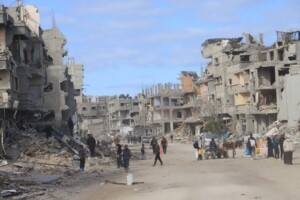
The civil war in Syria (2011–2024) exiled several million people who took refuge in neighbouring countries, in particular in Lebanon, home to one of the highest proportions of refugees per capita in the world. In the towns in the north of the country, such as Tripoli, many Syrian families live in very precarious social conditions, marked by insecurity and instability, limited access to healthcare and an extremely bleak economic outlook. Several studies have shown that these factors combined contribute to ongoing mental health issues in refugee populations, including anxiety disorders, post-traumatic stress symptoms and depressive disorders.[1]Ludovic Vieira et Anne-Laure Pontonnier, « Prévalence des troubles psychiques et déterminants du parcours de soins chez le public migrant précaire : données d’une revue de la littérature », … Continue reading
Humanitarian organisations working in these environments face a constant increase in demand, even as funding and specialised resources are limited. Mental health care and psychosocial support often rely on small teams of social workers, community mediators and a few clinicians.[2]Jean-Pierre Bouchard, Nancy Stiegler, Anita Padmanabhanunni et al., « Psychotraumatologie de la guerre en Ukraine: la question de la prise en charge psychologique des victimes réfugiées ou … Continue reading
“The language barrier is one of the most frequent obstacles in aid relationships.”
The language barrier is one of the most frequent obstacles in aid relationships. Clinicians do not always have at their disposal interpreters trained in cultural mediation or the vocabulary of psychological trauma. Yet literal translations are not sufficient to understand the traumatic accounts of displaced persons, refugees or simply migrants as they often use idiomatic expressions, cultural metaphors and indirect forms expressing suffering.[3]Louis Jehel et Mathieu Guidère, Psychotraumatologie : les mots du trauma, Lavoisier, coll. « Psychiatrie en pratique », 2022.
Against this backdrop, some organisations are investigating the use of digital tools that can assist with language and cultural mediation. Artificial intelligence (AI), especially through speech recognition and semantic analysis, opens up new opportunities to facilitate the collection of accounts in the first languages of displaced people.
In Tripoli, the non-governmental organisation (NGO) International Multilingual Mediators (MIM)[4]See the website of this NGO dedicated to promoting and defending mental health of vulnerable groups: www.ngo-mim.org has carried out, in this respect, a small-scale experiment using the PSYCHOLING tool,[5]The PSYCHOLING tool is not based on one of the major AI platforms such as Anthropic or Open AI but was developed initially to analyse the accounts of trauma of people affected by natural disasters … Continue reading AI-based language assistance software designed to help listen to and analyse accounts of traumatic experiences. The aim was not to replace human interpretation but to explore ways AI can help understand better what exiles say.
The context of the micro-experiment
The experiment was conducted in an urban district of Tripoli where several Syrian refugee families are housed. The aim was to assess the value of an AI-based language assistance tool in helping record accounts of traumatic experiences of war and exile.
Selecting participants
Participants were recruited through the local network of humanitarian mediators working with displaced Syrian families. Two volunteer families agreed to take part in the experiment. This group consisted of ten people in total: six adults and four adolescents aged fourteen to seventeen. They came from two regions in Syria (Aleppo and Idlib) and had been living in Tripoli for two to five years.
At a preliminary information session they were told how the tool works and personal and data protection measures were explained. Informed consent was obtained both orally and in writing. It was made clear that participation could be suspended at any time.
Interview format and conditions
The interviews were carried out in a quiet space provided by a local community association. Each participant had a one-on-one interview lasting forty to sixty minutes on average.
The interview was carried out in dialectal Arabic (Syrian or Lebanese). The participants were invited to speak freely, telling the story of their displacement and the significant events in their experience of war and exile.
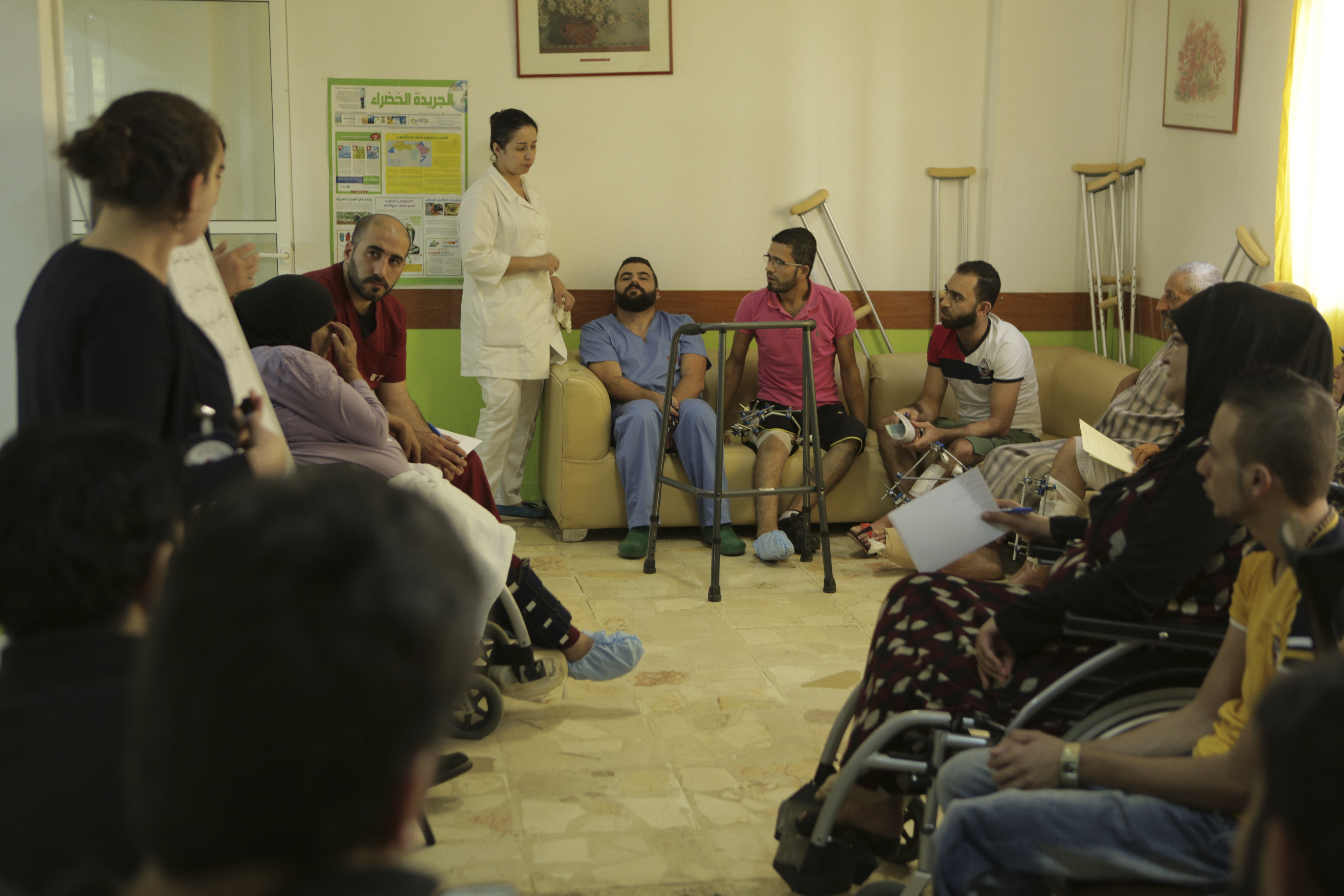
A language mediator from the NGO MIM was present during each session to facilitate communication with the humanitarian team and provide a reassuring listening environment.
Collecting and processing accounts
The accounts were taken down as dictation onto a tablet so the account could be transcribed automatically in real-time, without storing the data in audio format. No names or information that could identify anyone personally was mentioned in the written transcripts collected.
The results produced by the tool were studied during feed-back meetings involving a language mediator, an aid worker and a clinician specialised in psychological trauma.
The analysis focused on whether the language indicators flagged by the tool were consistent with the human interpretation of the accounts. The mediators contributed cultural and contextual clarifications of certain idiomatic phrases or metaphors used by the participants.
This stage averted the risk of any strictly algorithmic reading of the accounts and let the interpretation stay rooted in the accounts’ cultural and narrative context.
Data protection and ethical considerations
All the data collected was anonymised before processing. The text files were stored in a secure space accessible only to the humanitarian research team involved in the experiment. No biometric data or identifying information was retained. The transcripts were only exploited for exploratory analysis purposes as part of this project.
The AI tool was only used to support the linguistic analysis. The clinical interpretation and the validation of the meaning of the accounts remained entirely the responsibility of the human professionals involved in the project.
Assistance technology
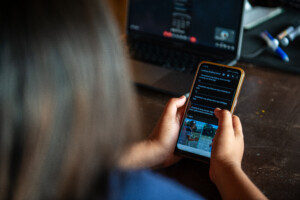
The tool used – PSYCHOLING – is designed as a support interface for humanitarian players working with migrant, refugee or exiled populations. It combines several functions: speech recognition, automatic transcription, clinical translation and exploratory analysis.
The first stage consists of taking down an oral account in the person’s mother tongue. Speech recognition helps identify the language and capture relatively spontaneous speech. The transcript retains the structure of the discourse, including any repetition, hesitation or pauses.
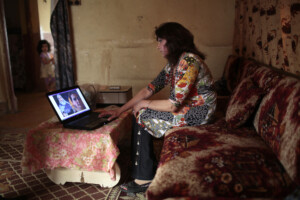
The second stage is a machine translation intended to make the content accessible to non-Arabic speaking humanitarian workers. This translation is systematically proofread by a language mediator in order to avoid mistranslations and misinterpretations (see figure below).
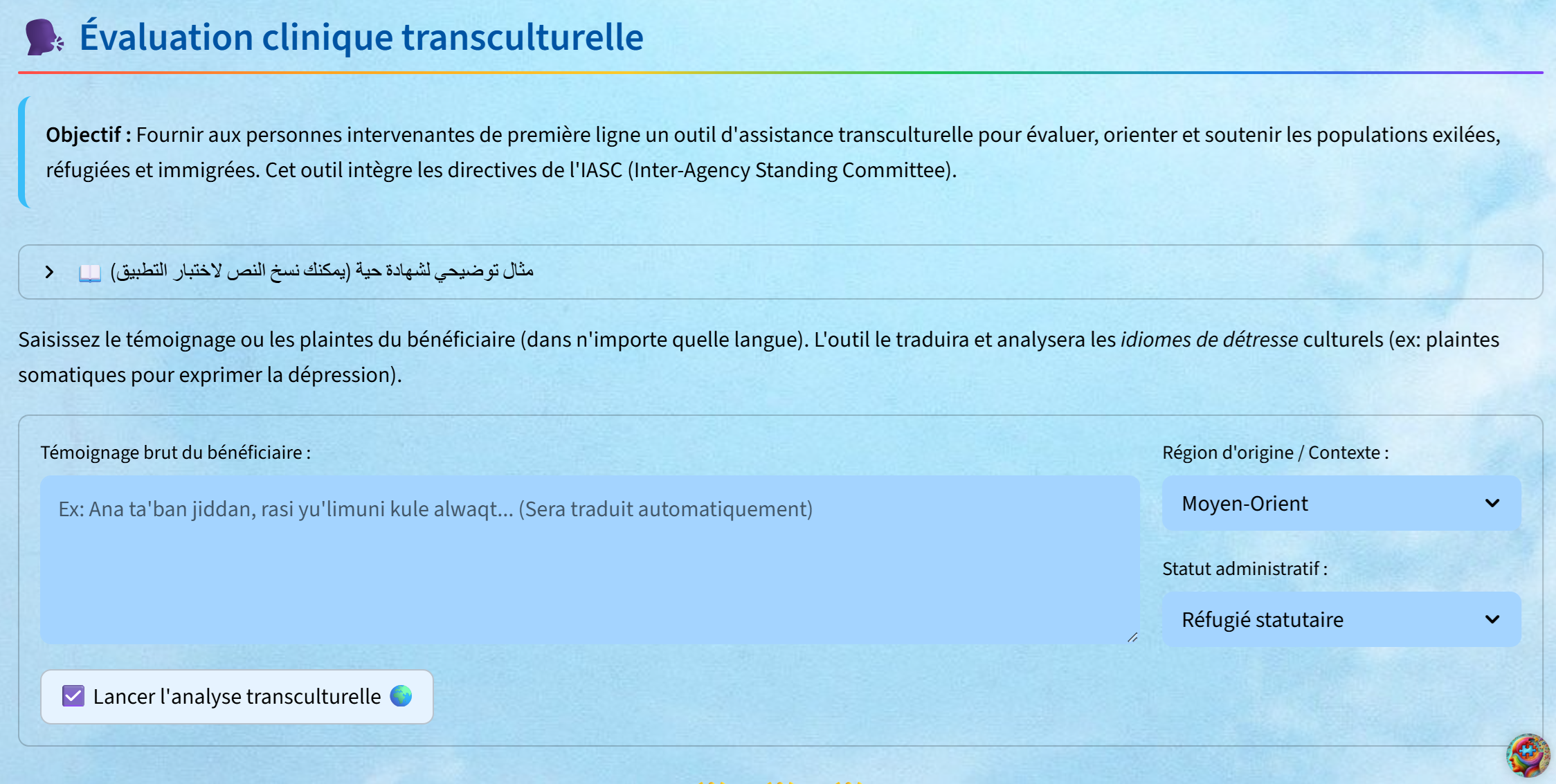
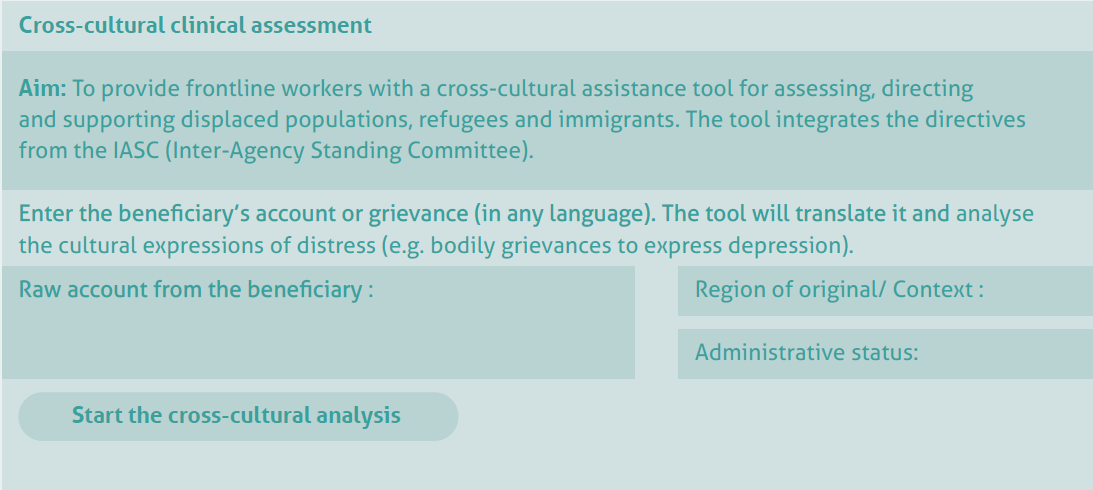
Finally, the tool can provide an exploratory psycholinguistic analysis aimed at identifying certain cultural expressions of psychological distress. Indeed, in most cultural contexts, emotional suffering is not expressed directly in the form of psychiatric categories. It can appear in the form of physical complaints, cultural metaphors or symbolic images. These expressions are sometimes described in anthropological literature as “idioms of distress”.[6]Geoffroy de Brabanter, « La dimension sociosomatique de la maladie. Rôle et apports de l’anthropologie médicale dans la pratique clinique », Droit, Santé et Société, vol. 10, no 2, 2023, p. … Continue reading
The interface also helps formalise some of the background information such as the main traumatic event, current symptoms, living conditions or the existence of a social support network. The aim is not to produce a diagnosis but to help those involved organise the information from the interview and compare it with the case studies of the analytical model.
What the psycholinguistic analysis can contribute
The experiment showed the tool could potentially assist in several ways in understanding the accounts. First of all, the possibility for participants to speak directly in their mother tongue made the narrative more fluent. They did not have to adapt their words to facilitate instant translation. The stories told contained more details and contextual elements.
Next, the automatic transcription of the accounts made it possible to preserve some structural features of the narrative. Repetition of words, breaks in sentences or long silences sometimes flagged highly emotionally charged moments.
During several of the interviews, the participants used metaphorical images to describe their experience of war. A father from Aleppo, for example, referred to a bombing raid by saying: “The sky opened up above us”. This phrase must not be understood as a metaphor from a specific culture, nor as a figure that is difficult to interpret. It could be understood by speakers from different backgrounds as it immediately conjures up the sudden emergence of a threat from above. Its value for the analysis lies rather in its possible recurrence in other stories of air attacks in which the expanse of the sky, usually associated with openness, distance or sometimes protection, becomes a place of threat and destruction.
In another account, a participant explained that she had been “sleeping with one ear open” since her arrival in Lebanon. This expression is not a particularly obscure cultural marker since it reminds us of common expressions in French such as “sleeping with one eye open” or “sleeping with just one ear”. A clinician, like any careful reader, could easily recognise a form of hypervigilance. The benefit of AI-assisted analysis does not therefore lie in uncovering a hidden meaning but in systematically identifying these types of expression throughout the corpus.
In total, seven participants used body language to describe their emotional state, such as “my head hurts all the time” or “my heart is heavy”. Here again these expressions are not necessarily so subtle as to elude the scrutiny of a knowledgeable clinician. Their value is more a matter of their accumulation and distribution in the narratives. The tool does not replace clinical interpretation but makes it possible to highlight recurring motifs, especially when mental suffering is expressed through the body rather than using explicit psychological vocabulary.
Four participants also mentioned sleep problems or an increased sensitivity to outside noise. These elements would probably have attracted the attention of a mental health professional. It is therefore not a question of attributing a superior diagnostic or interpretative capability to AI but, rather, of using it as a support in classifying, comparing and linking dispersed fragments of narrative.
These elements were then discussed and analysed at meetings involving a language mediator, a humanitarian worker and a clinician specialising in psychotraumatology. This stage of discussion by humans is pivotal since it makes it possible to identify immediately understandable expressions, culturally based formulations and clinical symptoms that only make sense in relation to the person’s whole story, their living environment and their trauma history.
Changing mediation
The introduction of a language analysis tool changes the way humanitarian workers and interpreters work together. In this small-scale experiment, AI was never used independently: each transcript and analysis was proofread by a mediator fluent in both Arabic and French.
In some cases, the tool helped clarify ambiguities of language. For example, the meaning of the Arabic word “khawf” can range from fear to worry or threat, according to the context. Semantic analysis showed that this term mainly appeared in passages describing events related to war. The mediator then specified that, in the dialect used by the interviewee, this word referred to an ongoing fear rather than a fleeting concern.
These interactions show that AI can support the work of mediators by providing a preliminary linguistic map of the narrative. It does not, however, replace human mediation, which remains essential for placing cultural references and expressions in their context.
Limitations and ethical issues
Several limitations were observed during the experiment. First, machine translations may simplify some complex cultural expressions. For example, religious metaphors or references to fatality were sometimes translated too literally.
Second, speech recognition proved sensitive to variations in accent or rate of speech. For this reason, some sentences had to be corrected manually by language mediators at the end of the automatic dictation.
Another challenge was related to the risks of standardising traumatic experiences. Language analysis models are often trained based on categories derived from Western psychiatry. Yet the ways of expressing suffering vary greatly according to people’s cultural background.[7]Amazigh Madi, « La culture comme cadre de la psychopathologie. Comment les croyances et les normes culturelles façonnent la manifestation et la perception des troubles mentaux », Rawafid, vol. 9, … Continue reading For example, during one of the interviews, a woman from Idlib described her experience through a spiritual interpretation of the ordeal. The tool interpreted some passages as indicating resilience when these expressions belonged principally to the register of religious faith.
Ethical questions linked to data protection are also pivotal. During this experiment, no audio recording was kept and all transcripts were anonymised. The data was used solely for the purpose of exploratory analysis.
The goal of AI specialised in mental health
The results of this micro-experiment suggest that large language models can help improve understanding of accounts of trauma when there is a major language barrier.
In humanitarian contexts, AI can support the work of players by helping with transcribing, organising and linking together the elements of the narrative. Its value does not lie in automatically objectifying the account, but in the possibility of retaining, with the agreement of the person concerned, a dated and contextualised record of what was expressed at the time of the interview, especially concerning the mental health, reported symptoms and living conditions described.
Several of the people encountered reported having viewed positively the experience of seeing their story transcribed as it went along and then having it quickly referred to in the dialogue with the professional. For them, this immediate visibility of their words seemed to reinforce the feeling of being listened to, acknowledged and taken seriously.
Real-time transcription can thereby put their accounts into a concrete form and bolster the alliance with the player, as long as the person concerned understands what is recorded, how it will be used and who can access it.
However, this view was not shared among all the participants. Two accounts expressed reservations regarding mediation by machine, either because its presence was felt as a form of interference in the human relationship, or because of concerns about personal data confidentiality, retention or transfer. These reactions suggest that AI should not be considered as a naturally reassuring or empowering tool for everyone. Its use requires clear information, explicit consent, the option to refuse or suspend its use, as well as a constant focus on data security and on maintaining a participant-centred clinical or humanitarian relationship.
Furthermore, the fact that everyone can, in theory, benefit from the help of the same tool can lead to greater fairness in taking down people’s accounts, by limiting certain variables linked to interview conditions, the receptiveness of the interviewers or the way in which the information is logged. From the point of view of victims, this relative standardisation can be felt as a guarantee that their words will not be less well received, less well protected or less well considered than those of other people.
The ethical challenge therefore does not merely consist of making the tool accessible to all, but also of ensuring that everyone can understand how it works, freely consent to its use, refuse to use it out of fear of negative consequences, and keep control over what is done with their words. Bearing this in mind, technology can support humanitarian action when it enhances the potential for victims to be heard on their own terms, without imposing a single form of narrative or reducing the cultural diversity of expressions of suffering to predefined categories.
The PSYCHOLING tool helped in the analysis of the interviews by identifying certain variations in discourse, certain psycholinguistic markers associated with traumatic experiences and certain recurring forms of expressing suffering. Its input was important not in any actual clinical decision but in helping those using it organise their listening sessions, identify areas for further study and develop a response better suited to each situation.
The action put forward, following this analysis, depended on several criteria: the intensity of the distress expressed, the presence of sleep disorders, hypervigilance or marked sensitivity to noise, the frequency of physical complaints, the existence of social withdrawal, the ability of the person to recount events, as well as the family, social and material resources available. The points identified by the tool were therefore discussed with the professionals and then contextualised within the person’s overall narrative, living environment and requirements.
Depending on the situation, this discussion could lead to different forms of intervention. Indeed, some people were given a counselling session focussed on stabilising their emotions, acknowledging their suffering and explaining post-traumatic reactions. Others were referred for psychological counselling or psychiatric care when the symptoms seemed persistent, pervasive or associated with an impairment of everyday functioning. Sometimes, the intervention could also be in the form of social guidance or putting people in touch with community resources.
PSYCHOLING-assisted analysis was thereby used to help in clinical and narrative triage and not as an independent diagnostic tool. It helped formulate working hypotheses, prioritise certain needs and avoid overlooking indications scattered throughout the story.
“AI must be thought of as an aid and back-up tool and not as a mediator or an autonomous translator.”
However, this new technology cannot be a substitute for human presence or cultural mediation. The expression of trauma requires a relational framework that the person trusts and where they feel valued and listened to. This is why the lessons learned from this experiment have led us to make to several recommendations.
First of all, AI tools used in the humanitarian field must be developed in close collaboration with linguists, clinicians and local aid organisations. Next, the analytical models must integrate the cultural specificities of the narratives and remain open to the plurality of the forms of expressing mental trauma, anxiety and depression. Finally, a form of AI that is genuinely useful in humanitarian work must be validated in the field (in refugee camps, in disaster-stricken cities, on migrant rescue boats, etc.) to make sure it helps better take into account words from elsewhere, without ever replacing them with voices “from here”.
With this in mind, AI must be thought of as an aid and back-up tool and not as a mediator or an autonomous translator. Ultimately, narratives find their legitimacy and trauma is recognised in all its dimensions through the empathy of the human ear.
Picture credit : ICRC
Translated from the French by Fay Guerry