What began as a mental health project for unaccompanied minors in France’s Île-de-France region has evolved to include a social work component. Now specifically supporting girls, this Médecins Sans Frontières programme merges humanitarian, social and medical approaches, recognising empowerment as a therapeutic outcome in itself.
Launched in 2017, the Île-de-France (IDF, the region covering Paris and seven other departments) project under the Médecins Sans Frontières (MSF) Mission France programme initially focused on improving mental health access for unaccompanied minors (UAMs). By offering nursing consultations and intercultural mediation, MSF aimed to lower barriers to UAM mental health support. As in other operational contexts involving displaced individuals, the mental health of UAMs attending the day centre was a major concern. The IDF project also adhered to the principle of not replacing existing institutions, focusing instead on documenting needs and securing access to available care. Despite the availability of Healthcare Access Points (PASS), it remains difficult to refer adolescents, polytraumatised by migration and living in precarious conditions in Europe, to psychologists, due to limited funding and placement capacity.
The emergence of social work practices in a mental health project
In this context, what prompted the decision to expand social work practices? And what role do they play in a humanitarian NGO project designed to improve access to healthcare, particularly mental health services? Most importantly, how were these practices structured to complement the health services typically provided by MSF?
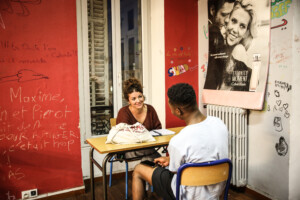
The IDF project now comprises a day centre offering consultations, group activities and a respite space, as well as a residential facility for the most vulnerable minors, with placements managed by a multidisciplinary team. The day centre’s healthcare team includes two nurses and two psychologists, working alongside a socio-legal team of two social workers, a legal officer and three intercultural mediators. They are supported by four social workers and a house manager responsible for the residential facility. Nearly a decade after the project’s launch, the majority of salaried positions and activities are now oriented towards social, rather than paramedical, support. Although this transition was made over a relatively long period, it is notable that practices were adopted from both social and humanitarian fields, occasionally creating challenges.
As a preliminary analysis, we will examine the primary – though not exclusive – reasons for integrating social work into MSF projects, as identified by Jacob Burns:[1]Jacob Burns, “Too much, Never Enough: Social Support at MSF”, 24 June 2024, https://msf-crash.org/en/humanitarian-actors-and-practices/too-much-never-enough-social-support-msf achieving therapeutic success, supporting operational effectiveness and enhancing individual well-being. Interestingly, the IDF project integrated social work into its operations by implicitly following this classification, moving through the stages as if they were successive steps in its development.
The first social worker job position was created in 2017, initially to address basic needs, such as food, hygiene and clothing, through referrals, and later to facilitate access to state medical assistance for foreigners living unofficially in France (AME), indicating that the project was chiefly driven by therapeutic success. Unfortunately, in this context, social workers at the day centre began to express growing frustration as their role was reduced to “simply obtaining AME medical coverage”, leaving them without the time or resources to engage in empowerment strategies and individual support planning, which are central to social work practice. In its early stages, the IDF project appears to have misconstrued the function of social work, deploying it primarily to “achieve therapeutic success”, namely to secure AME coverage and facilitate access to healthcare rather than “enhance individual well-being”. The granting of an AME card, however, constitutes only the first stage in engaging effectively with the French healthcare system, such as finding a doctor and making and managing medical appointments.
Additional social services were introduced over time, which also aimed to improve operational efficiency. Such support took the form of transport vouchers allowing young people to reach MSF consultations and other engagements, meals offered at the day centre to those presenting for appointments hygiene items supplied by nursing staff… This subsequently led to the recruitment of a project legal officer to address frequent requests from UAMs regarding the regularisation of their administrative status and their access to the child protection services to which they were entitled. In this role, the legal officer ensured that young people were informed about the progress of their youth court cases and, where appropriate, about asylum procedures or options for regularising their status once they turned eighteen.
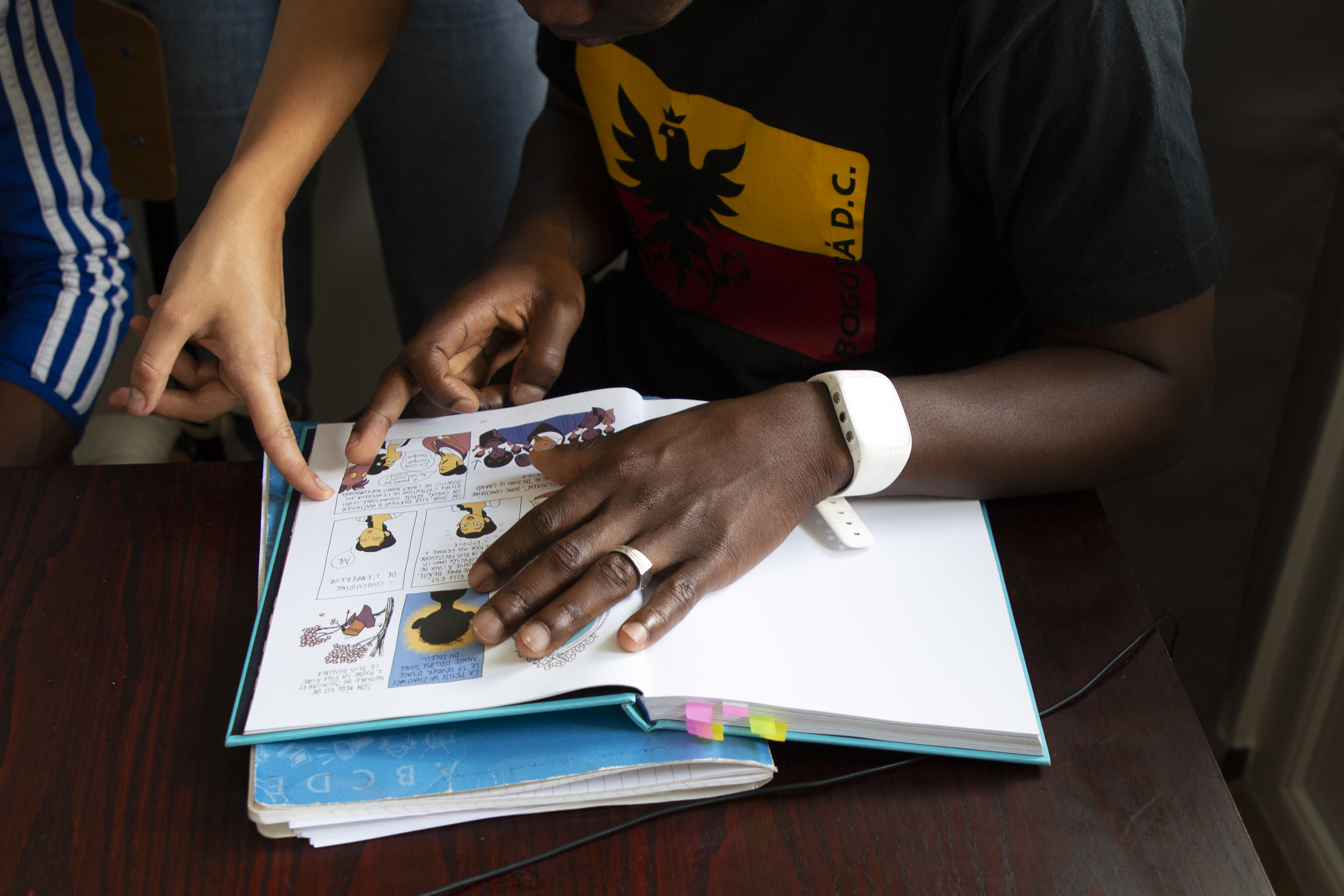
Only in the past two years has a more comprehensive reflection on the role of social work within the project been undertaken, leading the team to conclude that the purpose of social services is to enhance individual well-being. This helped clarify the role of social workers and recognise their work dedicated to empowering beneficiaries.
French health and social care professionals at Médecins Sans Frontières
While MSF is widely recognised as an employer among paramedical staff, awareness of this is more limited among social work professionals, including social workers, legal officers, educators and house managers. Moreover, job applicants didn’t always fit the expectations sought by the project. Human resources departments have recently begun posting vacancies on platforms used by social work professionals, rather than those targeting primarily humanitarian applicants. This small initiative has enhanced our visibility and reputation among prospective applicants.
Once recruited, professionals from French health and social care institutions often reported being surprised by the “humanitarian timeframe”. MSF’s standard annual project “reset” exercises can indeed be surprising for those used to non-profit organisations with multi-year mandates, formal terms of reference, tender procedures or even departmental social services. Social work is typically planned over an extended period, not necessarily for individual support but for the management of institutional or service projects. The possibility of annual changes in operational priorities or directions can create instability and insecurity among social workers. However, as the role of social work within the project has evolved, these exercises have contributed to the structuring, recognition and formal integration of social work practices into the project’s operational priorities, especially in recent years. The creation of the first socio-legal affairs manager position at the end of 2022 offered an opportunity to further structure and standardise these activities, aligning them with nursing and mental health services.
“While humanitarian workers are used to analysing the environments in which they operate, grounding work in a specific area through long-term, local engagement is a core principle of social work practice.”
This “humanitarian timeframe” also led to delays in consolidating the project’s local presence. While humanitarian workers are used to analysing the environments in which they operate, grounding work in a specific area through long-term, local engagement is a core principle of social work practice. However, in the early years of the IDF project, uncertainty regarding its continuity initially made it more convenient for teams to prioritise links with Paris, despite the day centre being located in Pantin, Seine-Saint-Denis department. As social work became increasingly central to the services and care offered to UAMs by the programme, this strategy began to present a range of challenges. For example, although social workers relied on relationships with organisations and institutions in Paris, referrals could not always be completed, as they required the individual to be formally “attached” to the local area. Similarly, high staff turnover and misunderstandings over the abrupt ending of some activities hindered the development of trusting, long-term partnerships. These challenges prompted us to reassess our routine practices and gain a deeper understanding of the day centre’s local environment and our integration into it.
The development of multidisciplinary practices and shared confidentiality
Interdisciplinarity quickly became both a cornerstone and a defining feature of MSF’s IDF project. Each young person receives nursing, social and legal consultations, as well as mental health support where appropriate, allowing professionals to conduct joint case reviews and adopt a holistic approach to care and pathways. Such multidisciplinary discussions and decision-making processes depend on a common understanding and practice of “shared confidentiality”. While generally accepted and practised within the social work sector, this approach is sometimes viewed differently in medical and paramedical professions. The IDF project engaged in a long and painstaking process to address this issue.
Regular involvement of MSF’s legal officers, along with the distribution of briefs clarifying French legal rules on information-sharing between professionals in child protection, whether confidential or not, was essential. However, medical and paramedical staff often found it difficult to see how certain information shared by a UAM during a consultation could be relevant to social care. Why would a social worker need to know that a girl was raped locally three weeks ago? How is that information relevant to her applying for AME assistance or enrolling at school? This limited understanding of the social work then being done often caused problems when it came to sharing sensitive patient information. Nonetheless, information on a young woman’s treatment adherence, for example, remains fundamental to ensuring quality referral to a housing service able to provide appropriate support where required. This work requires patience and repeated engagement to help medical and paramedical teams fully grasp the complexities of social work and understand how access to certain information can improve case management.
These internal changes paved the way for a more marked development: the gradual adoption of a protection-based approach made necessary by the increasing complexity of the cases handled.
The role of protection in informing social work practice
In July 2024, the IDF project entered a new operational phase when it decided to provide support solely to unaccompanied minor girls. This decision was driven by several factors, including two major findings: public and private local actors were providing boys with more comprehensive support and the small number of girls in the previously mixed group made it difficult for the team to provide them with an adequate level of specialised care.
Many of these young girls showed clear signs of sexual or labour exploitation. However, we didn’t succeed in making them engage in the program at a sufficient level to allow meaningful support in these issues, and they frequently disengaged shortly after the first meeting. The multidisciplinary team frequently discussed the exploitation faced by these girls and felt they lacked the tools to respond effectively, both individually and within the programme’s broader service care framework. Cases of exploitation and control cannot be managed through a single consultation; effective intervention requires a coordinated, comprehensive approach. Likewise, girls who became pregnant before or during the programme needed more than medical support, whether to consider termination or to prepare for motherhood.
While these complex situations helped medical and paramedical staff recognise the benefits of social support for these girls, the team also drew on protection practices from other MSF projects to structure its approach.
Girls enrolled in the IDF programme are often targeted by abusers who exploit their extreme precariousness in France, subjecting them to abuse, sexual exploitation or forced labour, typically in domestic work or childcare. Initial interventions usually focus on protection and, in nearly all cases, housing. The subsequent step involves assessing risks and safely removing girls from situations in which “housing” is provided in exchange for violence or exploitation.
In 2024, during her initial social assessment, a girl enrolled in our programme was reluctant to provide details about her accommodation. Professionals in a multidisciplinary team meeting noted with concern that, after missing several appointments, she had stopped coming to the centre. She had already expressed her desire to enrol in school to her social worker, who then contacted her, suggesting she return to the day centre and proposing a date for her school placement tests. During this meeting, the girl disclosed that she was staying with a woman who allowed her to sleep in the living room in exchange for “babysitting” duties. The sixteen-year-old girl, it emerged, was left alone, sometimes for several weeks, to care for two young children, aged three years and nine months respectively, while the mother was abroad. This prevented the girl from attending her appointments and, as a result, from enrolling at school. The social worker, with the girl’s consent and in collaboration with the rest of the team, arranged for her safe removal from the situation and her placement in appropriate accommodation.
“The social work team illustrated how social work and protection approaches, often referred to as “safeguarding” in humanitarian settings, complement one another in preventing abuse or exploitation by aid actors.”
These cases further highlighted the necessity of educating girls about their rights and how to exercise them. The social work team illustrated how social work and protection approaches, often referred to as “safeguarding” in humanitarian settings, complement one another in preventing abuse or exploitation by aid actors. The tools used in protection are similar to those employed in the French medico-social sector, established by a law[2]French Law n° 2002-2 of 2 January 2002 on the reform of social and medicosocial action, Journal officiel de la République française, 3 janvier 2022, … Continue reading of 2002 that promotes user-centred care management, based on clear and accessible information, informed consent, user participation in decision-making, respect for privacy, access to appeals and the like. By informing girls of their rights, teaching them to recognise abuse and encouraging them to speak up, we hope to prepare them to exercise full autonomy beyond the MSF project.
Social work, in this context, moves beyond simply ensuring young people receive care to become a form of care in itself, with empowerment as its primary aim. According to the classification put forward by Jacob Burns, mentioned above, the purpose of social work in the IDF project is now to promote individual well-being, on the same level as medical care, by applying the tools and perspectives of social work and humanitarian practice as part of a patient-centred approach. This process offers new insights into how humanitarian and social approaches can engage in dialogue, merge and mutually strengthen each other to more effectively address the needs of young, isolated and highly vulnerable individuals.
Translated from the French by Steven Durose