

According to the authors, humanitarian aid and social action remain artificially compartmentalised, and continue to operate within enduring colonial hierarchies. Mental health and psychosocial support (MHPSS) can serve as a bridge – provided that approaches are decolonised and power relations are genuinely redistributed.
Humanitarian action and social work are generally considered distinct fields. The former is expected to intervene rapidly in moments of acute disruption, while the latter is organised around longer processes of care and social protection. However, in both the Global North and Global South, emergency and chronic crises are increasingly overlapping. Displaced families, young people experiencing trauma, poverty and marginalisation, and migrants caught between borders and welfare systems all reveal the same reality: chronic instability is affecting societies everywhere. In this context, the traditional division between social support and humanitarian response is becoming illusory. People need continuity and dignity, not fragmentation and temporary fixes.
Any effort to rethink and transform the intersection of these fields must consider the deeper histories that shape them. Both traditions – humanitarian action and modern social work – are influenced by charitable models connected to colonial systems, within which hegemonic identities and worldviews came to structure authority, legitimacy and practices of care. Coloniality describes the persistence of colonial hierarchies after the end of colonial administrations, in that they structure social relations around race, in a system where power and knowledge structures remain racialised and classist. These inherited frameworks continue to shape who is given power, how expertise is defined and why some groups are positioned as recipients rather than partners. Scholars[1]Tanja Kleibl, Robel Abay, Anna-Lisa Klages et al. (eds.), Decolonizing Social Work: From Theory to Transformative Practice, Bloomsbury Academic, 2024 ; Carolyn Noble and Annaline C. S. Keet, … Continue reading in critical social policy and decolonial studies argue that these historical assumptions remain embedded in contemporary practice.
In this broader context, mental health and psychosocial support (MHPSS) can provide an important reference point. Originally developed for use in emergency settings, MHPSS has evolved into an approach that links protection, recovery and community well-being. By focusing on relationships, a sense of belonging and social conditions that promote well-being, MHPSS provides a practical approach to integrating humanitarian and social responses.
As crises increase and societies become more divided, there is a growing need for approaches that ensure equity, continuity and responsibility. For affected people, this becomes imperative. This article examines the histories of humanitarian action and social work, and the changes needed for them to be meaningfully integrated.
Examining social and humanitarian action through historical and colonial perspectives
Recognising the shared colonial foundations and enduring colonialities shaping both modern social work and humanitarian action is essential for meaningful convergence. Colonial expansion not only organised relations abroad but also reconfigured hierarchies within Europe itself, establishing “whiteness” as a normative standard of humanity, competence and authority – as considering whiteness not simply as a skin colour, but as a hegemonic identity, position and ideology. Modern social work, formalised in the 19th century within social institutions, has been shaped by the racial and class hierarchies of the time where approaches to care were frequently informed by Western and often Christian frameworks and took paternalistic and deficit-oriented forms. Humanitarian action later became professionalised within post-colonial and neo-colonial contexts, similarly reproducing hierarchies of expertise and deservingness while privileging Eurocentric knowledge.
Humanitarian and social work reproduce several forms of coloniality described by researchers. The “coloniality of power”[2]Anibal Quijano, “Coloniality of Power, Eurocentrism, and Latin America”, Nepantla: Views from South, vol. 1, no. 3, 2000, pp. 533–580. refers to the racialised, gendered and classist systems of knowledge, governance and care inherited from empires, in which whiteness functions as a neutral organising principle where “others” – marginalised populations – are often considered subjects of correction or intervention. The “coloniality of knowledge”[3]Walter D. Mignolo, “The Many Faces of Cosmo-polis: Border Thinking and Critical Cosmopolitanism”, Public Culture, vol. 12, no. 3, 2000, pp. 721–748 ; Id., The Darker Side of Western Modernity: … Continue reading – is capturing the ongoing privileging of Western social and psychological sciences as authoritative, marginalising other epistemologies and producing interventions that pathologise marginalised live. And the “coloniality of being”[4]Frantz Fanon, Peau noire, masques blancs, Seuil, 1952 ; Nelson Maldonado-Torres, “On the Coloniality of Being”, Cultural Studies, vol. 21, no. 2-3, 2007, pp. 240–270 ; María Lugones, “Toward … Continue reading is revealing how hierarchies of humanity endure, shaping whose lives are valued and whose suffering is normalised or framed as deficiency. Together, these colonialities structure interpretations of vulnerability, rights and well-being. In an era of growing multiculturalism and societal polarization in Europe, these hierarchies profoundly influence who decides, who provides, and who is positioned as a recipient, underpinning the uneven protections and tensions explored below.
Continuity and preparedness: the two key words in response to the polarisation of the current geopolitical context
The current geopolitical environment is increasingly characterised by chronic, intersecting crises that transcend conventional humanitarian borders. Protracted conflicts, mass displacement, persistent poverty, political polarisation, oppression and occupation are blurring the line between “emergency” and “recovery”. From Syria to Ukraine, from Palestine to Western Sahara, from the Sahel to the streets of European capitals, it is no longer possible to distinguish between short-term crisis response and long-term social protection. People living in chronic precarity require continuous care that combines social welfare and humanitarian support.
In the Global South, humanitarian interventions are often driven by a sense of urgency and adhere to globally recognised standards for psychosocial support and protection. In contrast, comparable vulnerabilities in Europe, such as unaccompanied minors, migrants and victims of social exclusion, are generally addressed as domestic policy issues, with limited accountability and application of humanitarian principles such as impartiality and dignity.
Europe’s approach reflects a persistent double standard in the application of humanitarian norms. Standards promoted globally, such as deinstitutionalisation and individualised care, are not consistently upheld within Europe itself, particularly for migrant and racialised populations. This uneven application reflects the enduring colonial hierarchies of being[5]See references cited in note 4. and human value that continue to determine who receives adequate care and protection.
Europe’s self-image as a humanitarian provider, rather than a potential site of humanitarian need, is reinforced by the deeply ingrained belief that crises occur “elsewhere”. Because of this colonial and invulnerable viewpoint, policymakers find it challenging to recognise vulnerability within Europe. Achille Mbembe characterises this viewpoint as a component of the postcolonial imagination,[6]Achille Mbembe, On the Postcolony, University of California Press, 2001. through which Europe continues to view itself as the centre of civilisation and humanity. Consequently, situations in which European populations require humanitarian aid, such as during pandemics,[7]Kristin B. Sandvik and Kjersti Lohne, “The humanitarianisation of the COVID-19 response”, Journal of Humanitarian Affairs, vol. 2, no. 3, 2020, pp. 1–5. This article analyses how Covid-19 … Continue reading natural disasters, political and economic crises, or widespread displacement, are often met with discomfort or denial.
This mindset limits Europe’s capacity to recognise its own suffering and establish genuine dialogue with the Global South to learn from its expertise and epistemologies, which could strengthen Europe’s own systems.
The current “humanitarian reset”, driven by funding fatigue and geopolitical competition, further highlights the limitations of treating humanitarianism and social welfare as distinct areas. A rights-based and dignified approach requires continuity, where immediate relief leads to long-term inclusion and social protection systems. Preparedness must be reimagined, not only as logistical readiness but also social resilience: the capacity to sustain human dignity amid chronic instability.
MHPSS as a convergence space
Appropriate MHPSS has become a bridge between social work and humanitarian aid, especially in crisis and post-conflict contexts. Developed in response to acute trauma, it now incorporates equitable, transcultural, rights-based and recovery-oriented perspectives, facilitating the transition from short-term emergency intervention to long-term social reintegration, collective healing and recovery.
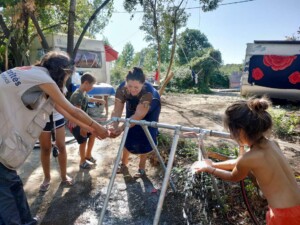
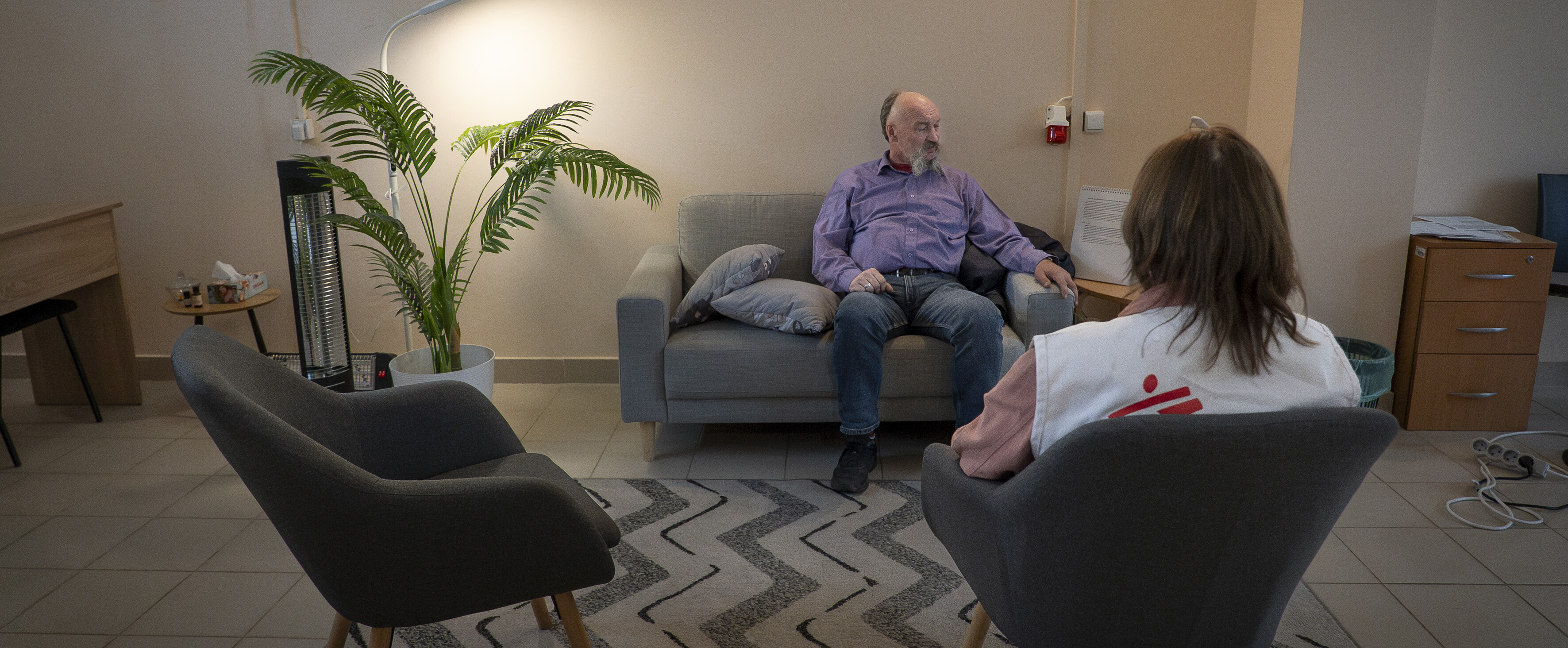
By considering the diverse emotional, social and structural aspects of well-being, MHPSS moves beyond the management of immediate crises and the characteristics of individual suffering. It recognises systemic oppression, power dynamics and structural violence, and restores people’s sense of belonging, agency and social participation. This makes MHPSS a natural convergence point between the humanitarian and social sectors, both of which are grounded in social action and solidarity practices. In practice, MHPSS illustrates a variety of approaches. For example, psychosocial programmes for displaced young people may combine culturally appropriate trauma-informed care approaches with dignified access to rights and skills development, supporting personal recovery and social participation. Migrant support centres in southern Europe, for example, can combine emergency psychological first aid with case management and housing support, linking care with advocacy and access to rights. Similarly, community-based programmes in post-conflict areas should connect individual psychosocial support with group activities that restore a sense of belonging and facilitate collective healing, while recognising the role of communities as agents of change.
However, scaling up these hybrid models presents challenges. MHPSS initiatives often face fragmented funding and different accountability frameworks, which makes ongoing collaboration difficult. Without intentional efforts to share power meaningfully, MHPSS approaches may unintentionally reinforce inequalities rather than transform them.
To reach its full potential, the continuity of MHPSS care needs to be integrated into national and local systems, embedding an understanding of well-being that considers intersecting factors. This makes psychosocial care a collective responsibility, focusing on systemic change rather than just interventions.
When applied appropriately, MHPSS acts as a convergence space, building conceptual and practical bridges that link relief and resilience, individual recovery and social justice, and emergency ethics and sustainable care.
Decolonisation, power transformation and local leadership in MHPSS: a way forward
If MHPSS can connect short-term help with long-term social action, the next step is to ensure that this connection is ethical and operational. Any convergence between humanitarian aid and social work must undergo a decolonial process to address the deeper power imbalances that still affect both fields. This requires not only questioning the export of standards to the Global South, but also the hegemonic assumptions that shape social action within Europe.
Despite years of critique, European systems continue to frame crises as external, thereby reproducing older hierarchies rooted in charity, colonial rule and paternalism, which influence how need, distress and well-being are defined in MHPSS.
The challenge is both technical and ethical, concerning how MHPSS frameworks are designed and assessed and how power shapes need, care allocation and legitimate knowledge. Practice-based responses include participatory assessments, shared governance structures and monitoring systems that incorporate community-defined indicators of well-being alongside clinical or institutional metrics. These approaches facilitate more balanced collaboration between humanitarian and social work professionals and support the continuity of care across emergency and non-emergency settings.
Decolonial MHPSS practices emphasise diverse meaningful understandings of distress, collective healing practices and social determinants of mental health, such as housing, legal status and livelihoods. These insights are integrated into service design. This shift involves recognising the legitimacy of different knowledge systems and types of care, while also dismantling the hierarchy that positions Western, white experience and expertise as universal and superior by default.
Sustainable convergence requires Europe to learn from community-anchored MHPSS practices and epistemologies from the Global South. In diverse European societies, this entails integrating diverse community representatives into service governance and valuing experiential and cultural knowledge alongside professional expertise. While these principles are becoming more prevalent, their implementation remains fragile, uneven and highly context-dependent.[8]In response to these challenges, some international organisations, including Terre des hommes, have begun internal reflections and learning processes aimed at questioning existing practices, opening … Continue reading
For the Global North, aligning humanitarian action with social work ethically also requires acknowledging Europe’s colonial past and how it continues to influence perceptions of vulnerability, expertise and universality. It is important to open up space for learning. In MHPSS practice, this translates into the following commitments:
- Centering racialised and marginalised voices and experiences in both the Global South and the Global North, including those of migrant, refugee and post-colonial communities in Europe, in MHPSS knowledge production, policy design and service delivery.
- Integrating epistemologies from decolonial scholars and non-Western frameworks into the academic curricula of social and psychological sciences and humanitarian studies, and questioning the universality of conceptualisations of values, well-being and good parenting.
- Dismantling racialised and classed assumptions that position white European standards as the norm and all others as inferior or deviant. This eliminates double standards such as accepting institutional care and low-quality standards without accountability for migrant children in the Global North while rejecting them for white children.
- Expanding culturally grounded approaches in MHPSS to make them ethically and clinically
- relevant by incorporating decolonial and materialist frameworks that situate mental health within broader histories of oppression, inequality and social stratification.
- Acknowledging that European colonial history is central to social and humanitarian action, and committing to making amends through equitable policies, truth-telling and accountability.
- Applying fundamental re-humanisation that rejects hierarchical notions of humanity and recognises European vulnerability without shame or denial.
Ultimately, decolonisation, power transformation and local leadership are essential. Together, they form the foundation of fair and effective convergence. Without these, neither humanitarian aid nor social work can address the chronic, polarised and interconnected crises facing our world today.
“Ethical convergence requires deliberate choices regarding local leadership, equity and a decolonial approach.”
MHPSS shows that social action and emergency response can coexist. However, ethical convergence requires deliberate choices regarding local leadership, equity and a decolonial approach, which preserves the strengths of each field and treats them as complementary, rather than merging them. In operational terms, this means designing MHPSS interventions that bridge emergency support and long-term social inclusion pathways. These interventions should be aligned with the Humanitarian–Development–Peace (HDP) Nexus and be embedded within local and national systems, rather than remaining parallel or temporary. Sustainable humanitarian-social partnerships require preparedness that goes beyond logistics to include social resilience and the continuity of rights-based care. This also requires mutual learning between the Global South and Global North, particularly as Europe acknowledges its own vulnerabilities and incorporates decolonial and materialist understandings of how structural determinants and historical power relations influence mental health and well-being.
By combining humanitarian action and social work through transformative, culturally grounded and participatory practices, we can address the complexities of a polarised and crisis-affected world while respecting diverse knowledge systems and avoiding the reproduction of historical injustices. This is particularly important at a time when the humanitarian sector itself is undergoing a necessary reset and reconsidering issues such as power, decolonisation, localisation and the limits of emergency-driven responses.
Picture credit: Caroline Thirion